
Recover More Value from Returned Devices
Receive, evaluate, test, and route returned devices toward the best available outcome. Group O provides device returns management and reverse logistics services that help organizations reduce supply chain costs, recover product value, and minimize unnecessary waste. Our teams receive returned devices, inspect their condition, perform testing and triage, and route each product according to client-defined requirements. Depending on the results, devices may be repackaged, reconfigured, repaired, refurbished, redeployed, resold, recycled, or de-manufactured.
From Return to Recovery
Group O connects return processing, evaluation, and dispositioning through a repeatable workflow.
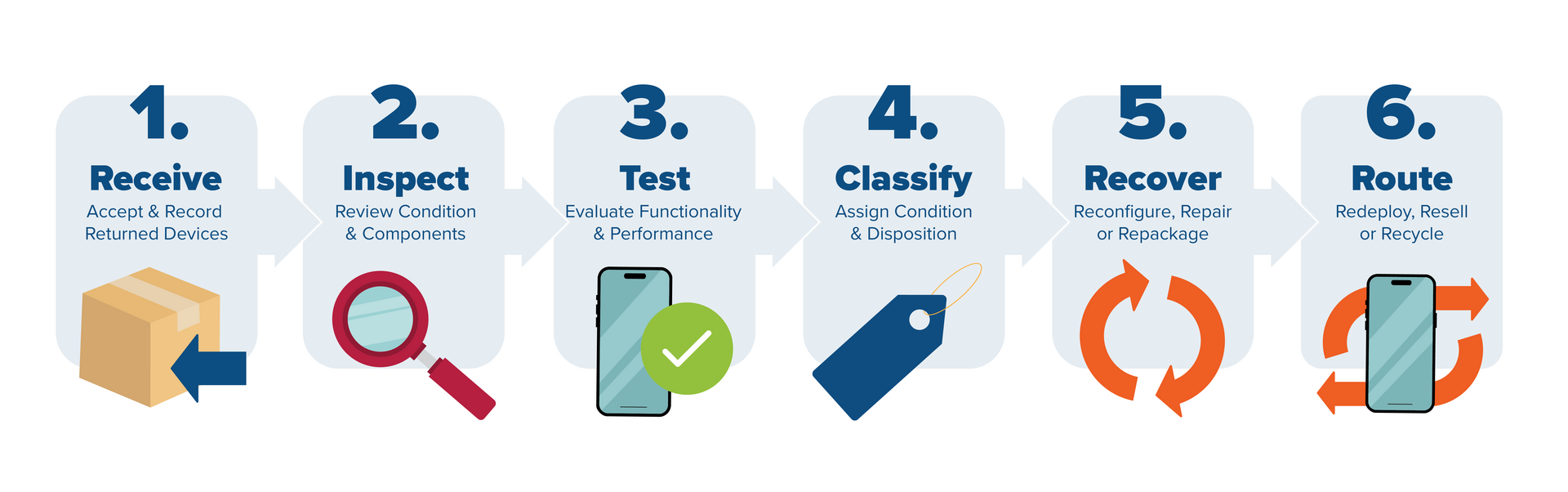
Manage Returns Through One Coordinated Process
Returned devices can arrive from retailers, demonstration programs, business users, field teams, repair providers, consumers, or other destinations. Each product may have a different condition, configuration, value, and appropriate next step.
Group O coordinates receiving, identification, inspection, testing, data capture, dispositioning, and routing through one integrated process. This approach helps organizations reduce handoffs, maintain visibility, and make consistent decisions about returned inventory.
Returns Management Services Can Include:
- Return receiving
- Device identification
- Serialized tracking
- Visual inspection
- Functional testing
- Device triage
- Condition evaluation
- Data capture
- Software restoration
- Repackaging and re-kitting
- Repair or refurbishment routing
- Recycling coordination
- De-manufacturing
- Final dispositioning
- Program reporting
Create Visibility from the Start
Accurate return processing begins when a device enters the facility.
Group O receives returned devices, records required product information, and identifies each unit according to program requirements. Serialized tracking can be used to connect a returned device with its product information, return source, processing status, and final outcome.
Receiving Services Can Include:
- Return intake
- Product identification
- Serial number capture
- Shipment verification
- Inventory reconciliation
- Return reason documentation
- Condition documentation
- Program classification
- Status assignment
- Exception identification
Determine the Appropriate Next Step
Returned devices require careful evaluation before they can be moved back into inventory, routed for repair, recovered for parts, or prepared for final disposition.
Group O inspects and triages devices according to client-defined requirements. The process can consider physical condition, functionality, software status, components, packaging, and intended next use.
Triage Can Include:
- Visual inspection
- Cosmetic evaluation
- Functional evaluation
- Accessory verification
- Packaging inspection
- Software status review
- Condition grading
- Pass or fail determination
- Exception routing
- Disposition assignment
Prepare Devices for What Comes Next
Returned devices may contain software, applications, settings, or demonstration content associated with their previous use.
Group O can reset, reflash, and reconfigure eligible devices according to the requirements of their next lifecycle stage. For example, a device used in a demonstration program may be restored to standard retail software before it is prepared for resale.
Configuration Services Can Include:
- Device reset
- Privacy clearing
- Software removal
- Software flashing
- Application installation
- Feature configuration
- Demonstration software removal
- Standard software restoration
- Configuration verification
- Resale or redeployment preparation
Use Testing to Guide Disposition Decisions
Testing provides the information needed to determine whether a returned device can be reused, reconfigured, repaired, refurbished, resold, or directed toward another outcome.
Group O can perform functional, visual, and other required testing according to each client’s device and program requirements. Devices that meet defined criteria can move toward recovery or redistribution, while devices that do not meet those requirements can be routed for additional evaluation, repair, recycling, or de-manufacturing.
Returns Testing Can Include:
- Functional testing
- Visual inspection
- Connectivity testing
- Component evaluation
- Software verification
- Repair quality testing
- Failure identification
- Post-repair verification
- Pass or fail determination
- Disposition support
Return Eligible Products to Circulation
Devices in sellable or reusable condition may require new packaging, accessories, printed materials, labels, or other components before they can return to inventory or move to their next destination.
Group O can re-kit and repackage eligible devices according to client requirements. Completed kits can be inspected, returned to inventory, and routed through fulfillment and distribution workflows.
Repackaging Services Can Include:
- Product cleaning
- Accessory replacement
- Component verification
- Device re-kitting
- Protective packaging
- Printed material insertion
- Label replacement
- Packaging inspection
- Inventory reintegration
- Fulfillment preparation
Extend the Useful Life of Devices
Returned products may require software updates, component replacement, or additional processing before they can return to circulation.
Group O can evaluate devices and route eligible products through approved repair or refurbishment workflows. Once completed, devices can be tested, verified, reconfigured, repackaged, and prepared for their approved next use.
Repair & Refurbishment Support Can Include:
- Repair routing
- Component replacement
- Software updates
- Refurbishment processing
- Post-repair testing
- Configuration verification
- Condition reassessment
- Repackaging
- Inventory reintegration
- Redeployment or resale routing
Reduce Waste & Recover Materials
Not every returned device can be repaired, reused, or resold. Products that have reached the end of their usable lifecycle may still contain components and materials that can be recovered.
Group O can route devices for recycling or de-manufacturing based on client-defined requirements. De-manufacturing allows devices to be disassembled so eligible components and raw materials can be separated for reuse or recycling.
End-of-Life Services Can Include:
- Recycling coordination
- Device disassembly
- Component recovery
- Material separation
- Parts salvage
- Raw material recovery
- Waste reduction
- Final disposition documentation
Route Each Device Based on Its Condition
Dispositioning connects the results of inspection, testing, condition grading, and program requirements to a defined outcome.
Group O creates repeatable workflows that help ensure returned devices are consistently classified and routed. This allows products with remaining value to move toward reuse or recovery while directing end-of-life devices toward appropriate recycling or de-manufacturing processes.
Disposition Decisions Can Consider:
- Device condition
- Functional performance
- Software status
- Component condition
- Repair requirements
- Resale eligibility
- Reuse potential
- Recovery value
- Client requirements
- Approved disposition paths
Follow Devices Through the Returns Process
Serialized tracking provides visibility into individual devices as they move through receiving, inspection, testing, reconfiguration, repair, recovery, and final disposition.
Group O can capture device status and program activity to help clients understand where returned products are, what actions have been completed, and what outcome was assigned.
Returns Visibility Can Include:
- Device receipt status
- Serial-level tracking
- Inspection status
- Testing results
- Condition classification
- Repair status
- Configuration status
- Inventory availability
- Disposition outcomeRecovery activity
Use Returns Data to Improve Decisions
Returned devices can provide valuable insight into product quality, supplier performance, recurring failures, repair activity, and program operations.
Consolidated returns data can help stakeholders identify common conditions, monitor disposition outcomes, evaluate recovery activity, and determine where additional testing or investigation may be needed.
Returns Analytics Can Support:
- Return reason analysis
- Recurring failure identification
- Product quality trends
- Supplier performance evaluation
- Repair activity monitoring
- Condition trends
- Disposition analysis
- Recovery tracking
- Process bottleneck identification
- Continuous improvement efforts
Capture More Value from Returned Products
The goal of an effective returns program is not simply to process products. It is to identify the best available outcome for each device.
Group O helps clients evaluate returned inventory and move viable devices toward reuse, redeployment, resale, repair, refurbishment, or component recovery. This approach can reduce unnecessary disposal and help return eligible products and materials to productive use.
Value Recovery Opportunities Can Include:
- Inventory reintegration
- Device reuse
- Device redeployment
- Product resale
- Repair and refurbishment
- Accessory recovery
- Component salvage
- Raw material recovery
- Packaging recovery
- Waste reduction
Multiple Paths for Returned Devices
A returned device’s condition and program requirements determine what should happen next.
Repackage Reconfigure Repair Refurbish | Redeploy Resell Recycle De-manufacture |
Connected Device Lifecycle Services
Device Returns & Dispositioning can operate independently or connect with additional Group O capabilities across the device lifecycle.
Engineering & Product Intelligence
Investigate device failures, develop testing methods, analyze product data, and provide insight that supports corrective action decisions.
Device Testing Services
Evaluate returned-device functionality, quality, reliability, construction, and failure conditions to support disposition decisions.
Software Flashing & Configuration
Reset, update, reflash, and verify returned devices for redeployment, retail restoration, reuse, or resale.
Device Kitting & Fulfillment
Re-kit, repackage, fulfill, and distribute recovered devices and components to their approved destinations.
Device Visibility & Analytics
Track serialized devices, return status, processing activity, recovery outcomes, and performance trends through centralized reporting.
ISTA Packaging Performance Testing
Evaluate packaging performance under shipping and handling conditions to help protect devices during redistribution.


