PCR Test for Cost Neutrality Shows an Even Better Result
Sustainability is no longer a choice—it’s a business imperative. Companies across industries are looking for innovative ways to reduce their environmental impact while maintaining operational efficiency and cost-effectiveness. At Group O, we recognize the growing need for solutions that help businesses achieve their ESG goals without compromising performance or profitability.
One such opportunity lies in packaging optimization, particularly in the use of stretch film. As more organizations seek alternatives to traditional virgin plastic, Post-Consumer Recycled (PCR) content films present a compelling option. However, many businesses hesitate to make the switch due to concerns about cost, performance, and supply chain disruptions.
This case study highlights how Group O partnered with a leading food manufacturer to explore the feasibility of PCR-based stretch film. Through rigorous testing and data-driven analysis, we uncovered a solution that not only met the company’s sustainability targets but also delivered measurable cost savings and operational efficiencies. Our findings prove that sustainability and cost optimization can go hand in hand—without compromise.
Situation
At Group O, we continuously seek innovative ways to help our clients optimize their packaging while meeting their sustainability objectives. As part of our commitment to supporting environmental, social, and governance (ESG) initiatives, we embarked on a study to evaluate the viability of using post-consumer recycled (PCR) content stretch film. Our goal was to determine whether this alternative could offer a cost-neutral solution while also contributing to sustainability targets.
Many companies face the challenge of balancing cost efficiency with environmental responsibility. While traditional virgin resin stretch films provide reliable performance, the demand for sustainable alternatives is growing. Our study aimed to explore whether a PCR-based stretch film could maintain packaging integrity, meet cost expectations, and deliver tangible environmental benefits. Our primary objectives were:
- Identify a Sustainable Solution – We wanted to assess whether PCR content stretch film could serve as a viable replacement for virgin resin films while aligning with ESG commitments.
- Ensure Cost Neutrality or Savings – A key concern for clients is the financial impact of switching materials. Our goal was to determine if a transition to PCR film could be achieved without increasing costs.
- Reduce Material Usage – By evaluating the performance of PCR-based stretch film, we aimed to find opportunities for reducing material consumption without compromising load containment or product protection.
While we initially set out to find a cost-neutral solution, the study revealed results that exceeded our expectations—showing not only cost neutrality but also measurable cost savings, material reductions, and environmental improvements.

Action
To evaluate the impact of switching to PCR-based stretch film, Group O conducted a comprehensive study across 11 high-volume manufacturing sites. Our team performed in-depth audits to collect baseline performance data and compared it to the proposed 30% PCR film.
Key steps included:
- On-Site Data Collection – Group O representatives performed detailed film audits at each location, assessing gauge, material usage, cost per pallet wrapped, force to load data, and overall performance to help meet sustainability goals.
- Apples-to-Apples Testing – Identical pallets were wrapped using both the current virgin resin stretch film and the new 30% PCR film alternative to ensure direct comparability.
- Cost Analysis – The financial impact was reviewed to determine whether the transition was cost-neutral or yielded savings.
- LCA (Life Cycle Analysis) Evaluation – A third-party LCA measured the environmental impact of the transition, analyzing reductions in fossil fuel consumption, global warming potential (GWP), and water consumption.
Results
While the initial goal was cost-neutrality, the study revealed benefits beyond expectations, including:
Cost Savings – Across 10 of 11 locations, the transition to PCR film resulted in cost reductions, with the highest savings reaching 18%.
Material Reduction – The new PCR film achieved an overall weight reduction of 56,000 lbs. annually with only one location experiencing a slight lbs. increase.
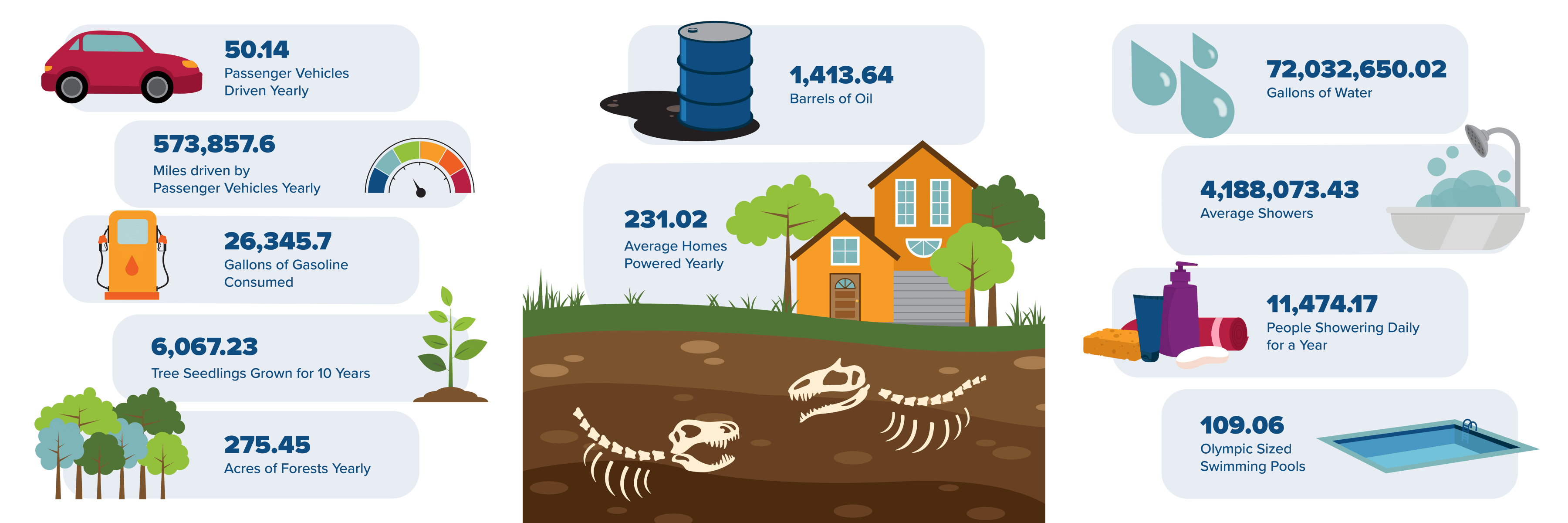
Sustainability Gains – The switch led to a 20% reduction in CO2 emissions and saved approximately 1,400 barrels of oil annually by decreasing virgin resin consumption.
Environmental Impact – The LCA confirmed reductions in global warming potential (GWP), fossil fuel usage, and water consumption.
Performance Parity – The PCR film performed at the same or better levels than virgin film, with no up-gauging required.
By leveraging Group O’s expertise in packaging optimization, this study demonstrated that PCR-based stretch films can deliver cost savings, material reductions, and measurable environmental benefits. This project serves as a model for manufacturers and distributors looking to achieve sustainability goals while maintaining cost efficiency and packaging performance. Check out the Life Cycle Analysis Results below.