
Test Devices for Quality, Reliability & Performance
Evaluate device functionality, construction, durability, connectivity, and resistance to real-world conditions through destructive and non-destructive testing. Group O performs destructive and non-destructive testing on nearly one million devices annually. We work with carriers, original equipment manufacturers, remanufacturers, and technology providers to evaluate new and current devices, suppliers, models, and process changes. Our testing services help clients identify defects, validate requirements, investigate product failures, and make more informed quality and supplier decisions before devices reach end users.
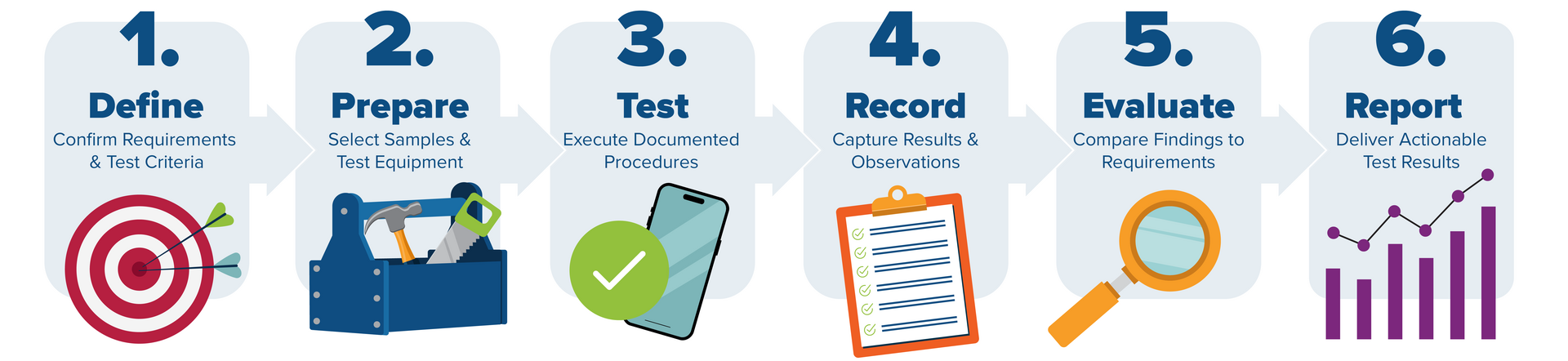
From Testing Need to Informed Decision
Group O connects test execution, documentation, and results through a repeatable process.
Make Confident Product Decisions
Device quality can affect customer satisfaction, return rates, warranty claims, supplier performance, and brand reputation. Independent testing provides the data needed to evaluate whether devices meet established performance and quality requirements.
Group O executes standardized and customized testing procedures based on the device, program, supplier, and defined testing criteria. Results can help quality, engineering, and procurement teams evaluate device performance, investigate concerns, and determine appropriate next steps.
Device Testing Can Support:
- New device evaluations
- New model qualification
- Supplier evaluations
- Remanufacturer qualification
- Process change validation
- Product performance verificationField failure investigation
- Repair quality evaluation
- Component verificationOngoing quality monitoring
Evaluate Devices Without Compromising Usability
Non-destructive testing assesses device functionality, components, connectivity, construction, and condition while keeping the tested unit intact.
Group O performs non-destructive testing as part of First Article Inspection and other quality programs. Testing procedures can be aligned with client specifications, device requirements, supplier standards, and identified quality concerns.
- X-Ray Testing: Evaluate internal device construction and help verify the presence of expected original equipment manufacturer components without disassembling the device.
- IP67 & IP68 Testing: Evaluate device resistance to water ingress based on defined testing requirements.
- Oleophobic Coating Testing: Assess whether screen glass coatings perform as intended.
- Radio Frequency Testing: Evaluate network connectivity and radio frequency performance.
- XRF Testing: Analyze material composition to help identify counterfeit or noncompliant components.
- Functional Performance Testing: Evaluate speakers, microphones, light sensors, power, connectivity, calls, texts, sounds, screens, buttons, and other device functions.
- Visual Inspection: Identify cosmetic concerns, assembly issues, surface defects, and other visible conditions.
Understand Device Durability & Failure Points
Destructive testing subjects devices to controlled stresses to evaluate durability, identify structural weaknesses, and understand how products respond to impact, repeated handling, water exposure, and other conditions.
These tests can support product development, supplier evaluation, manufacturing quality, failure investigation, and quality benchmarking. Findings help clients understand where and how products fail so they can determine the appropriate response.
- Drop Testing: Use automated testing and slow-motion video capture to evaluate structural performance during controlled drops.
- Tumble Testing: Simulate repeated drops and handling conditions that devices may experience during use.
- Submersion Testing: Evaluate device resistance to water exposure under defined testing conditions.
- Impact Testing: Assess the strength and durability of screens, enclosures, and other device components.
- Teardown Analysis: Inspect internal construction, workmanship, components, and potential areas of noncompliance.
Engineer-Developed Tests For Your Devices
A device testing program can be developed around the product, lifecycle stage, supplier, and quality concern.
- New Product Evaluation: Evaluate devices before production, approval, or deployment.
- Supplier Qualification: Compare device performance against established supplier requirements.
- First Article Inspection: Test initial samples before broader production or distribution.
- Process Change Validation: Evaluate devices following manufacturing or process changes.
- Field Failure Investigation: Test returned samples to investigate reported conditions.
- Remanufactured Device Testing: Evaluate device functionality, construction, and quality after remanufacturing.
Investigate Device Problems
When products fail in the field, testing can help determine whether the concern is isolated or may indicate a broader product, component, supplier, environmental, or process issue.
Group O can receive failed-device samples, perform visual and functional evaluations, conduct teardown analysis, and use targeted testing to investigate potential causes. Examples may include evaluating water ingress, component condition, structural damage, connectivity, workmanship, or repair quality.
Testing findings can support additional investigation, test development, supplier discussions, corrective actions, or ongoing quality monitoring.
Field Failure Testing Can Include:
- Returned-device evaluation
- Failure reproduction testing
- Functional testing
- Water ingress evaluation
- Teardown analysis
- Component inspection
- Structural evaluation
- Comparative sample testing
- Repair quality testing
- Findings documentation
Test What Matters to Your Product
Standard testing does not address every device, quality concern, or intended use. Group O can execute custom testing procedures developed around specific devices, requirements, suppliers, failure modes, or operating conditions.
Testing requirements may define the sample set, equipment, test method, data collection process, acceptance criteria, and reporting format. Documented instructions help create consistency across samples and repeated testing activities.
Custom Testing Can Support:
- Unique device requirements
- New product introductions
- Supplier comparisons
- Suspected failure conditions
- Component concerns
- Product or process changes
- Repair validation
- Performance benchmarking
- Pilot testing programs
- Ongoing quality programs
Create Consistent Results
Reliable test results depend on more than equipment. Testing professionals need clear procedures, controlled processes, appropriate workspaces, and consistent documentation.
Group O’s industrial and reliability engineers support the development and implementation of testing processes. Detailed test instructions help technicians perform procedures consistently and provide documentation that can also support client, supplier, remanufacturer, repair, or testing operations.
Process Support Can Include:
- Testing workflow design
- Documented test instructions
- Testing station design
- Equipment integration
- Sampling requirements
- Data collection procedures
- Quality controls
- Technician training
- Process implementation
- Continuous improvement
Device Testing FAQ
Learn more about Group O's device testing capabilities, including destructive and non-destructive testing, supplier qualification, failure investigation, and custom testing programs.
A. Group O performs destructive, non-destructive, functional, reliability, material, water ingress, radio frequency, component, visual, and customized device testing. Testing can support new products, suppliers, process changes, remanufactured devices, field failure investigations, and ongoing quality programs.
A. Non-destructive testing evaluates a device without intentionally damaging it. It can be used to assess functionality, connectivity, internal components, material composition, water resistance, screen coatings, construction, and cosmetic condition while keeping the unit intact.
A. Non-destructive capabilities include X-ray testing, IP67 and IP68 testing, oleophobic coating evaluation, radio frequency testing, XRF analysis, functional performance testing, and visual inspection. We also customize tests for our clients.
A. Destructive testing subjects a device to controlled stresses or damage to evaluate durability, understand failure points, and identify structural or construction weaknesses. The tested unit may no longer be usable after the procedure.
A. Destructive capabilities include automated drop testing, tumble testing, submersion testing, impact testing, and teardown analysis. Group O can also develop custom tests for our clients.
A. Yes. Testing procedures can be customized around a device, supplier, intended use, performance requirement, failure mode, quality concern, or process change. The testing program may define equipment, samples, procedures, data collection, acceptance criteria, and reporting requirements.
A. Yes. Failed or returned devices can be evaluated through functional testing, visual inspection, teardown analysis, component inspection, water ingress evaluation, failure reproduction, and other targeted testing. Findings can help determine whether additional investigation or corrective action is needed.
A. Yes. Testing can help compare device performance against defined requirements when evaluating new suppliers, remanufacturers, product models, or process changes.
A. Yes. Detailed instructions and documented procedures support consistent test execution. Documentation can also support training and process alignment across client, supplier, remanufacturer, repair, or testing operations.
A. Yes. Devices can be flashed, configured, and verified as part of a broader device workflow. Software services may include operating system installation, application deployment, feature configuration, demonstration software, device resetting, and preparation for the device’s intended use.
A. Yes. Returned devices can be received, inspected, tested, and routed according to client-defined requirements. Testing results may help determine whether a device should be redeployed, reconfigured, repaired, resold, salvaged, recycled, or dispositioned.
A. Testing may be appropriate during product development, supplier selection, First Article Inspection, product introduction, manufacturing or process changes, field failure investigation, repair validation, and ongoing quality monitoring.
Connected Device Management Services
Testing is one part of a successful device lifecycle strategy. Explore the connected services that help organizations configure, deploy, track, and manage devices at scale.
Engineering & Product Intelligence
Gain deeper insight into device performance, quality trends, and product improvements.
Software Flashing & Configuration
Prepare devices for deployment with software imaging, configuration, and provisioning services.
Mobile Device Kitting & Fulfillment
Streamline deployment with customized kitting, packaging, and distribution services.
Returns Management
Manage device returns, processing, refurbishment, and disposition through a centralized workflow.
Device Visibility & Analytics
Monitor inventory, device status, and operational performance through real-time reporting and analytics.
ISTA Package Testing
Reduce shipping damage with package testing designed for real-world transportation environments.


