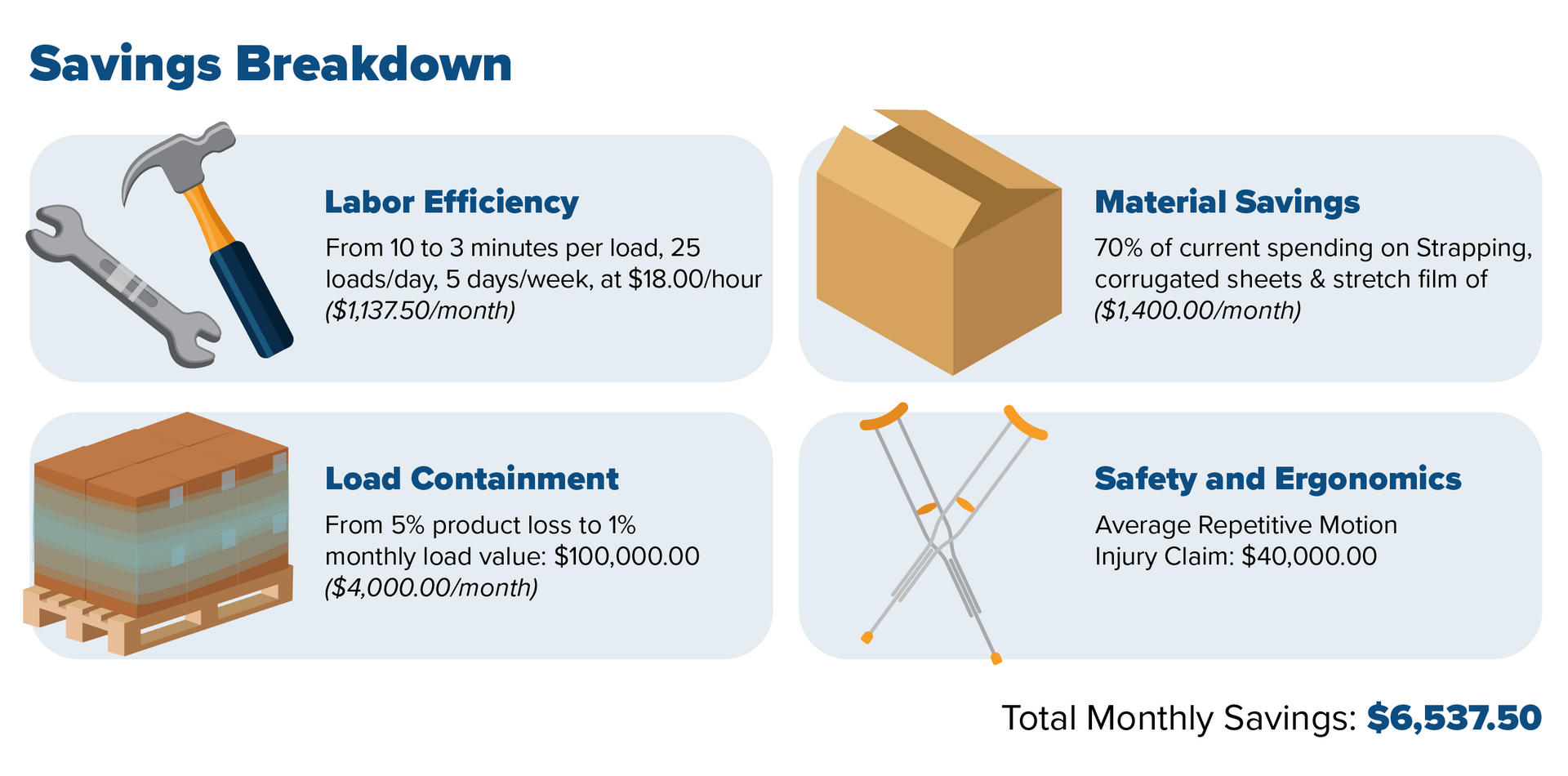
Packaging Automation Assessment Reveals Significant Savings and Performance Gains
Situation
A manufacturer was relying on a labor-intensive process to secure palletized loads before shipment. Each pallet required multiple packaging materials, including stretch film, strapping, and corrugated slip sheets placed between pallet layers.
The process took approximately 10-12 minutes per load and required multiple forklift interactions. In addition to the labor demands, the customer was concerned about load security and the amount of packaging material being consumed throughout the operation.
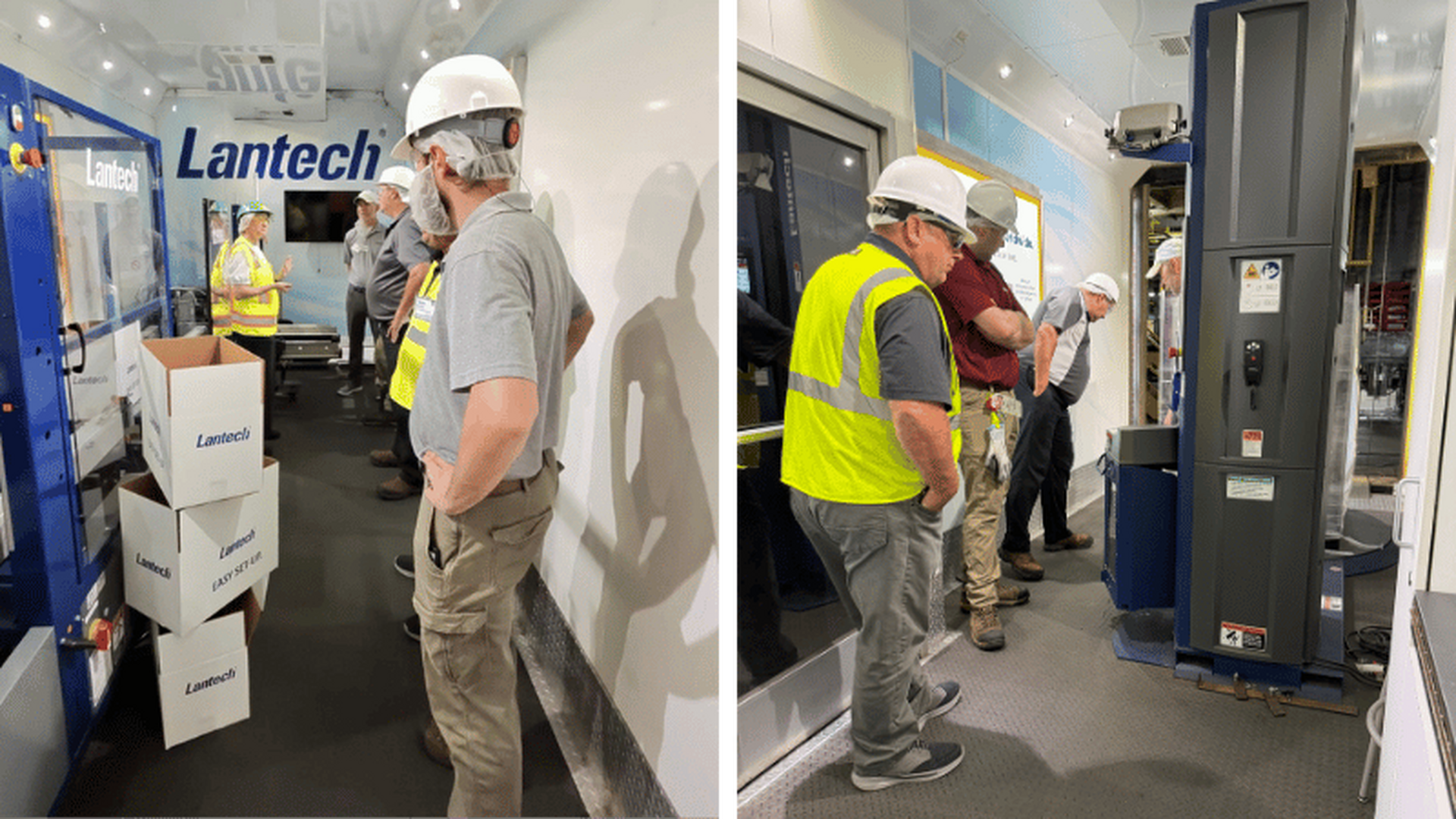
To better understand opportunities for improvement, warehouse and operations leadership participated in an on-site automation assessment using Lantech's mobile testing trailer.
Solution
During the evaluation, the customer team observed live testing performed on their actual products and pallet configurations using Group O's packaging automation specialists and Lantech equipment.
What began as a demonstration quickly drew attention across the facility. Warehouse and operations managers were joined by more than a dozen additional employees who gathered to observe the testing and review the results firsthand.
Using a Lantech QL400XT stretch wrapper with integrated scale technology, the team analyzed the customer's current packaging process and compared it against an optimized automated solution.
The assessment included:
• Replacing the customer's existing stretch film with a higher-performance film
• Eliminating load strapping
• Testing alternatives to corrugated slip sheets
• Measuring containment force using our Force-to-Load testing technology
• Evaluating material usage, labor requirements, and overall load stability
The team first removed the customer's existing stretch film and strapping and rewrapped the same load using the optimized stretch wrapping solution. They then conducted additional testing using a poly slip sheet alternative and ultimately tested the load without corrugated sheets altogether.
Why Testing Matters
One of the most valuable aspects of packaging automation assessments is the ability to validate results before implementing a solution. By testing actual products, packaging configurations, and production scenarios, manufacturers can make decisions based on measurable performance data rather than assumptions. In this case, a single assessment identified opportunities to improve load security, reduce labor, eliminate unnecessary packaging materials, decrease forklift activity, and generate thousands of dollars in weekly savings. For many organizations, gains like these can help justify equipment investments and accelerate return on investment. At Group O, packaging automation assessments help customers uncover hidden opportunities for efficiency while ensuring products are protected throughout the supply chain.